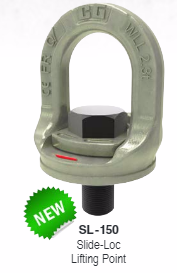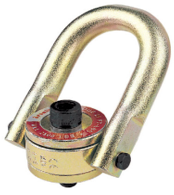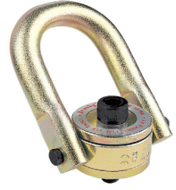


As we are starting 2018, don’t forget to inspect all Rigging and Lifting Equipment to make sure that it is ready for another year of service. You can perform these periodic rigging inspections at any time of the year, but it is important to understand that users are required by ASME standards to perform a periodic inspection of all of your slings and hardware at least once a year.
Bishop Lifting’s Services Department is available to come to your location and perform rigging inspection services. If you are interested in having Bishop’s Services department perform a periodic inspection on your rigging equipment contact them at 713-674-2266 or services@lifting.com. Our team can help you develop an inspection schedule that best suits your company's needs. Sometimes due to severity of use, periodic inspections can be required to be performed monthly, quarterly or annually.
You are not required to use a third party for your periodic rigging inspections, and can use any of your employees that consider to be qualified based on experience and training. If you do not feel that you have any employees that are qualified, Bishop Lifting also offers training on rigging gear inspection. We offer many training options from 1 hour presentations all the way up to 2 day Rigging Inspector courses. The length of the training and the scheduling can be customized to meet your needs and your schedule. For more information contact our training department at 713-674-2266 or training@lifting.com.
Basic Sling Inspection by Type:
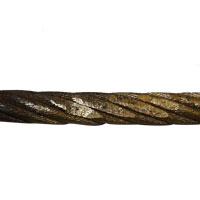
Wire Rope Sling Removal Criteria:
-
Missing or illegible sling identification
-
Broken wires
-
for strand-laid and single-part slings, ten randomly distributed broken wires in one rope lay, or five broken wires in one strand in one rope lay
-
for cable-laid slings, 20 broken wires per lay
-
for less than eight-part braided slings, 20 broken wires per braid
-
for eight-part or more than eight part braided slings, 40 broken wires per braid
-
-
severe localized abrasion or scraping
-
kinking, crushing, bird caging, or any other damage resulting in damage to the rope structure
-
evidence of heat damage. (wire rope with a fiber core can be used up to 200F and IWRC can be used up to 400F)
-
other conditions, including visible damage, that cause doubt as to the continued use of the sling
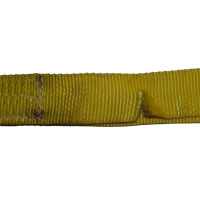
Web Sling Removal Criteria:
-
missing or illegible sling identification
-
acid or caustic burns
-
melting or charring of any part of the sling (nylon and Polyester synthetic web slings can be used to 194 F)
-
holes, tears, cuts, or snags
-
broken or worn stitching in load bearing splices
-
excessive abrasive wear
-
knots in any part of the sling
-
discoloration and brittle or stiff areas on any part of the sling, which may mean chemical or ultraviolet/sunlight damage
-
other conditions, including visible damage, that cause doubt as to the continued use of the sling
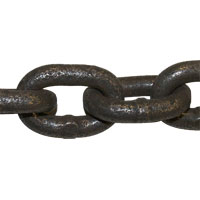
Chain Sling Removal Criteria:
-
missing or illegible sling identification
-
cracks or breaks.
-
excessive wear, nicks, or gouges. Minimum thickness on chain links shall not be below the values listed.
-
stretched chain links or components.
-
bent, twisted, or deformed chain links or components.
-
evidence of heat damage. Alloy chain slings can be used at up to 600F on a regular basis. They can be used at up to 1000F once, but then they have to be replaced.
-
excessive pitting or corrosion.
-
lack of ability of chain or components to hinge (articulate) freely.
-
weld splatter
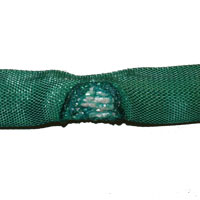
Round Sling Removal Criteria:
-
missing or illegible sling identification
-
acid or caustic burns
-
evidence of heat damage (Nylon and Polyester round slings can be used up to 194 F)
-
holes, tears, cuts, abrasive wear, or snags that expose the core yarns
-
broken or damaged core yarns
-
weld splatter that exposes core yarns
-
knots in the round sling, except for core yarns inside the cover
-
other conditions, including visible damage, that may cause doubt as to the continued use of the sling
Hook Removal Criteria:
-
missing or illegible hook manufacturer’s identification or secondary manufacturer’s identification
-
missing or illegible rated load identification
-
excessive pitting or corrosion
-
cracks, nicks, or gouges
-
wear — any wear exceeding 10% (or as recommended by the manufacturer) of the original section dimension of the hook or its load pin
-
deformation — any visibly apparent bend or twist from the plane of the unbent hook
-
throat opening — any distortion causing an increase in throat opening of 5% not to exceed 1⁄4 in. (6 mm)(or as recommended by the manufacturer)
-
inability to lock — any self-locking hook that does not lock
-
inoperative latch (if required) — any damaged latch or malfunctioning latch that does not close the hook’s throat
-
damaged, missing, or malfunctioning hook attachment and securing means
-
thread wear, damage, or corrosion
-
evidence of excessive heat exposure or unauthorized welding
-
evidence of unauthorized alterations such as drilling, machining, grinding, or other modifications
Shackle Removal Criteria:
-
missing or illegible manufacturer’s name or trademark and/or rated load identification
-
indications of heat damage, including weld spatter or arc strikes
-
excessive pitting or corrosion
-
bent, twisted, distorted, stretched, elongated,
-
cracked, or broken load-bearing components
-
excessive nicks or gouges
-
a 10% reduction of the original or catalog dimension at any point around the body or pin
-
incomplete pin engagement
-
excessive thread damage
-
evidence of unauthorized welding
-
other conditions, including visible damage, that cause doubt as to the continued use of the shackle
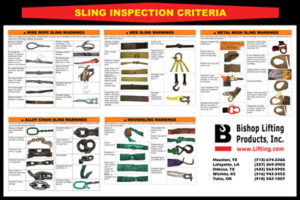 For more information on removal criteria for other types of equipment or to get a copy of the Sling Inspection Criteria poster below contact our training department at 713-674-2266 or training@lifting.com.
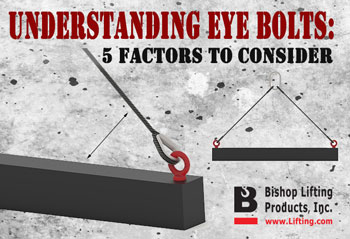
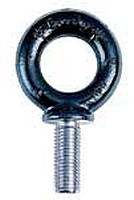
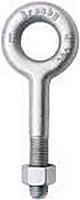
 As the sling angle becomes smaller the tension being placed on the eye bolt increases while the eye bolts capacity diminishes drastically. It is very important that riggers understand this phenomenon completely in order to choose the proper eye bolt to make their lift safely.
 It is also important to realize that eye bolts are not designed to rotate under load, and that in order to function properly you must apply tension across the plane of the eye of the eye bolt. The eye bolt must be aligned during installation and tightened to secure it against rotation during lifting. This means the rigger must install the plane of the eye bolt inline with the sling leg. This is done using shims from the manufacturer. It is not recommended that you use more than one shim to align the eye bolt with the sling leg. The manufacturer should be able to provide you with a shim of the proper thickness to turn the eye bolt to the proper alignment.