Eye bolts
The first item to consider is whether you need a shouldered or non-shouldered eye bolt.
Non-shouldered eye bolts are only designed to be used for completely vertical lifts. If you are going to be lifting with your slings at an angle or with any kind of angular loading, you will need to use a shouldered eye bolt. Even when using a shouldered eye bolt, you must be sure that it is installed properly before you can apply any type of angular loading to it. If the shoulder is not completely flush so that it can function properly, the shouldered eye bolt can only be used for vertical lifts.
For example, when using a Crosby eye bolt with a tight sling angle of 30 degrees the tension applied to the eye bolts during the lift will be two times the weight of the load being lifted. At the same time, the eye bolt itself has been reduced to 25% of it's original capacity. Some manufacturers do not recommend that you use their eye bolts at an angle below 45 degrees. If you do not account for both the increase in tension and the loss of capacity, the rigger will overload your eye bolt, and you are running the risk of damaging your equipment or dropping the load.
The third factor to consider when selecting the correct eye bolt for a lift is to take the dimensions of the eye bolt eye into account. You want to make sure that all hardware and rigging equipment that will be attaching to the eye bolt will fit comfortably into the eye and be able to function properly.
For instance, if hooks are being attached to the eye bolts, you need to make sure that the hook fits comfortably through the eye. The load should rest in the bowl of the hook, and the hook should be able to align itself with the sling leg and not get kinked when tension is applied.
The final aspect to consider for proper application of eye bolts is the strength and thickness of the material that the eye bolt will be installed into. Even if the eye bolt you choose is the correct style and capacity, the material into which you are installing it must be capable of surviving the forces that will be applied during the lift. You will want to look at the drawings or consult with an engineer to make sure that the load can be safely lifted with the number of pick points you are planning to use and their locations on the load.
If an eye bolt is not the proper rigging hardware for the lift, there are two main alternatives to using eye bolts as your attachment points.
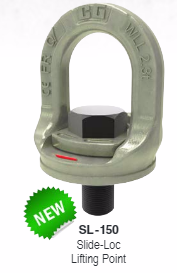
Crosby Slide-Loc Lifting Points- Crosby's new SL 150M Slide-Loc has several features that set it apart from the standard eye bolt. It has a patent pending locking mechanism that slides to lock the bolt for installation, then slides back to be ready for lifting.
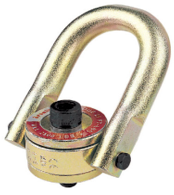
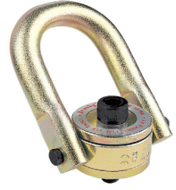
Swivel Hoist Rings- when they are installed and torqued properly swivel hoist rings are the most efficient and ideal option to use for lifting points.